
2026 Senior Travel Insurance Guide: Coverage Limits and Recommended Plans for Ages 60 to 85

Want to take your parents abroad, but can't seem to find any insurance that works? You're not the first person to face this frustration.
The older you get, the fewer insurance options available, the higher the premiums, and the lower the coverage amounts. After 70, the obstacles multiply. But that doesn't mean it's impossible — you just need to know where to look. This article clarifies the coverage limitations for each age bracket, compiles the 2026 maximum insurable ages across insurance companies, and covers 4 things you must know before purchasing coverage.
TL;DR: Travel insurance premiums for those 60+ are roughly 1.5-3x higher, with notably fewer options above age 70. Maximum insurable ages differ by company, going up to 85. Always truthfully disclose pre-existing conditions when applying — chronic disease medication is not covered by travel insurance. A 70-year-old traveling to Japan for 7 days costs approximately NT$800-2,000 in premiums.
Premiums 1.5-3x Higher for 60+ But Absolutely Worth It — Overseas Hospitalization Can Cost Hundreds of Thousands
Travel insurance premiums for those over 60 are roughly 1.5-3x the standard rate, but compared to overseas hospitalization costs that can easily reach hundreds of thousands of NT dollars, this money is absolutely worth it. The older you get, the less stable your health — jet lag, climate changes, and dietary differences can all destabilize otherwise stable conditions.
So when taking your parents abroad, insurance isn't optional — it's essential. The problem is that those who need it most are the hardest to insure.
Why Do Premiums Increase with Age? Premium Calculation Methods
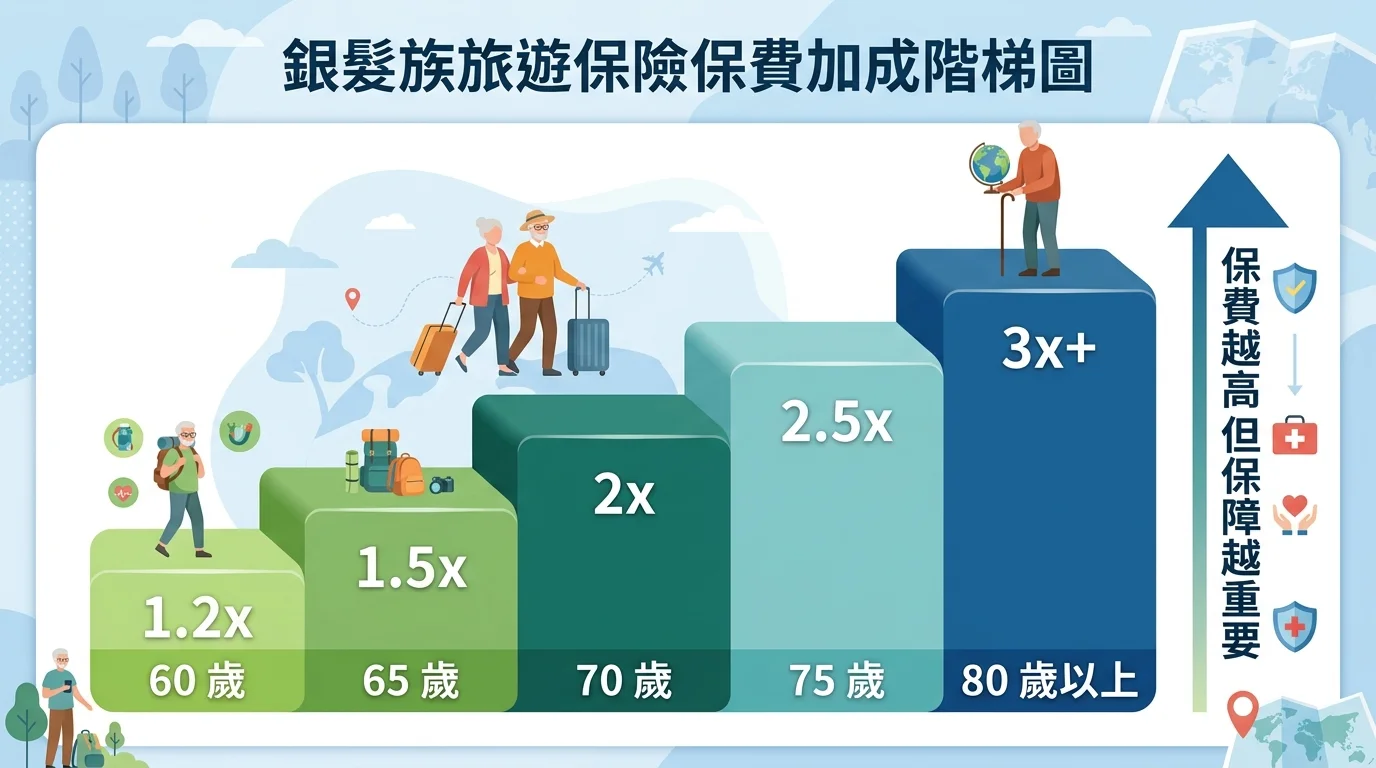
Premium calculations typically use age 60 as the dividing line:
| Age Range | Premium Multiplier | Notes |
|---|---|---|
| Under 60 | Base rate | Standard adult rate |
| 60-64 | ~1.2-1.5x | Slight increase |
| 65-69 | ~1.5-2x | Noticeable gap begins |
| 70-74 | ~2-2.5x | Fewer available plans |
| 75-79 | ~2.5-3x | Requires specific search |
| 80+ | ~3x+ | Very few companies offer coverage |
High premiums aside, they're still a bargain compared to overseas medical costs. For a 70-year-old traveling to Japan for 7 days, premiums run about NT$800-2,000. A single emergency room visit in Japan costs over NT$50,000 — the value of insurance is self-evident.
Common Coverage Limitations for Ages 60+
The older you are, the more restrictions apply. Common limitations include:
- Reduced maximum coverage: Originally insurable up to NT$3 million, may drop to NT$1-1.5 million
- Certain coverage excluded: Such as trip cancellation insurance, high-risk activity coverage
- Health declaration required: Must fill out recent health status and medication records
- Pre-existing condition exclusions: Known chronic conditions fall outside coverage
- Stricter claims review: More complete medical documentation required
These limitations are admittedly annoying. But look at it this way — having some coverage is always better than none. A basic travel insurance policy at minimum provides financial relief during unexpected situations.
How Different Are Coverage Limits by Age Group?
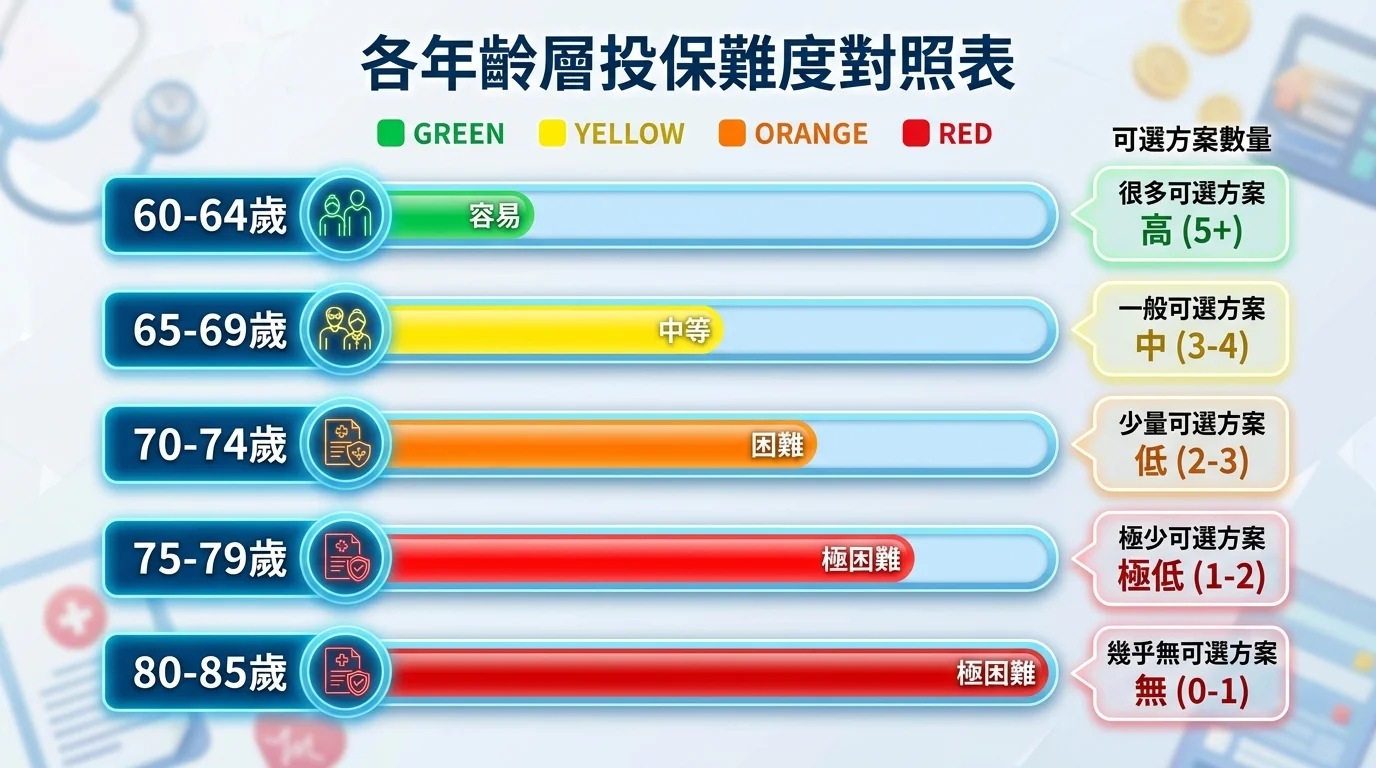
Coverage difficulty varies by age bracket. Here's a breakdown to give you a realistic picture when shopping for your parents' insurance.
Ages 60-64: Most Plans Available for Normal Purchase
Early 60s is still quite manageable. Most insurance companies accept travel insurance applications for this age group, with premiums 20-50% above standard adult rates and minimal coverage differences.
Basically follow the regular process — no special effort needed.
Ages 65-69: Some Plans Begin Adding Restrictions
After 65, some companies start imposing additional conditions. Health declarations may be required, or certain add-on coverage may no longer be available.
Advice: Proactively disclose health conditions before applying. The risk of concealment is greater — if an incident occurs and undisclosed pre-existing conditions are discovered, the entire policy's claims could be voided.
Ages 70-74: Fewer Options, Potentially Reduced Coverage
70 is a more significant threshold. Available insurance plans noticeably decrease. Some companies reduce maximum coverage from NT$2 million to NT$1 million, and certain add-on coverages (like trip cancellation) are no longer offered.
We once did an online comparison for a 72-year-old — of 6 property insurance companies, only 4 accepted the application, with significant premium variations. The cheapest and most expensive differed by nearly 2x, though coverage content also differed. Compare at least 3 options.
Ages 75-79: Requires Extra Effort to Find Accepting Companies
Above 75, finding plans takes more time. Major property insurers still offer coverage (like Cathay and Fubon), but options are limited.
If you can't find options on your own, consider using an insurance broker for comparisons. They're more familiar with each company's age limits and can find suitable plans faster. Coverage is still available at 78 — just takes more searching.
Ages 80-85: Very Few Companies Offer Coverage, Watch the Fine Print
80+ is the most difficult age range. Very few companies offer coverage (some property insurers cap at 85), premiums are 3x+ the standard adult rate, and coverage content is more basic.
Being able to get insurance at all is already positive. At this age, don't agonize over which plan is best — if it provides coverage with reasonable terms, it's worth considering.
What Senior Travel Insurance Plans Are Available in 2026?
Now that you understand the limitations, let's look at actual available options.
Insurance Company Maximum Age Comparison Table
| Insurance Company | Max Insurable Age | 70+ Premium Multiplier | Health Declaration | Notes |
|---|---|---|---|---|
| Cathay Property | 85 | ~2-3x | Required | Most complete elderly plans |
| Fubon Property | 80 | ~2-2.5x | Required | Lower max coverage |
| Shin Kong Property | 80 | ~2-3x | Required | Some add-on coverage excluded |
| Mingtai Property | 75 | ~2x | Plan-dependent | Best for under 75 |
Above is 2026 estimated information; actual coverage terms are subject to each company's latest announcements.
Long-Duration Travel (6+ Months) Insurance Options
More retirees are spending extended periods living abroad. Insurance for trips exceeding 6 months has even fewer options and higher premiums.
Key considerations:
- Some plans cap at 180 days — beyond that requires segmented coverage
- Long-term premiums aren't simply short-term rates multiplied proportionally; discounts exist but aren't large
- Chronic disease medication and regular check-up costs are almost never covered — stock up before departure
Senior Premium Estimates
Example: 70-year-old traveling to Japan for 7 days:
| Plan Type | Premium | Medical Coverage | Flight Delay Included |
|---|---|---|---|
| Basic | ~NT$800-1,200 | NT$500K-1M | No |
| Standard | ~NT$1,200-1,800 | NT$1M-1.5M | Yes |
| Comprehensive | ~NT$1,800-2,500 | NT$1.5M-2M | Yes |
Given the importance of taking your parents abroad, this premium investment is very worthwhile.
All insurance plan comparisons → Travel Insurance Recommendation Guide
Domestic Hot Spring Hotels — No Insurance Hassles | Jiaoxi Evergreen Resort Deals
Taking your parents on a domestic Taiwan trip is also wonderful — no worrying about insurance, language barriers, or jet lag.
4 Things to Know Before Purchasing Senior Travel Insurance
These 4 items are essential knowledge before buying insurance for your parents. Overlooking them could cause claims issues.
Pre-Existing Condition Disclosure Obligation
You must truthfully disclose current health conditions and medications when applying. Hypertension, diabetes, heart disease — disclose everything regardless of severity.
The consequences of concealment are serious: if an incident occurs and undisclosed pre-existing conditions are discovered, not only will the current claim be denied, but the entire policy could potentially be voided. Fill out honestly — even if it means a surcharge or partial exclusion, at least the remaining coverage is still valid.
Chronic Disease Medication Coverage
This is a common misconception. Most travel insurance does not cover routine chronic disease medication costs. It covers "unexpected situations," not ongoing chronic disease treatment.
Before taking your parents abroad, you must:
- Stock up enough chronic disease medication for the entire trip (bring 3-5 extra days' worth just in case)
- Carry an English medication certificate from the doctor (may be needed at customs)
- Confirm travel insurance claims conditions for "acute flare-ups of chronic conditions"
Emergency Medical Evacuation Importance
Elderly travelers have higher chances of needing emergency evacuation from remote tourist areas to major hospitals. Such evacuation costs can reach hundreds of thousands of NT dollars, especially overseas.
Many people only look at coverage amounts and overlook "emergency medical evacuation" coverage. For those taking elderly parents abroad, this coverage may be just as important as basic medical. Be sure to confirm it's included when selecting a plan.
Credit Card Travel Insurance Age Limits
Planning to rely on your credit card's complimentary travel insurance? Many cards stop covering travelers above age 70.
Common credit card travel insurance age caps:
- Most banks: 65-70
- A few banks: 75
- Very rare: No age limit but significantly reduced coverage
Don't rely solely on credit card insurance when taking parents abroad — always purchase separate coverage. If taking parents to Europe, pay special attention to Schengen insurance requirements → Europe Travel Insurance Recommendations
Senior Travel Insurance FAQ
Q: Can you still buy travel insurance at 70+?
A: Yes, but with fewer options. Cathay Property insures up to 85, Fubon and Shin Kong to 80, Mingtai to 75. Premiums are about 2-3x standard adult rates, with potentially lower coverage caps. Consider using an insurance broker to compare options across companies.
Q: How do you buy travel insurance at 80+?
A: Very few companies offer coverage at 80+ (some property insurers cover to 85). Premiums are 3x+ standard adult rates with more basic coverage. If you can find coverage, it's worth considering — medical risks abroad are higher at this age. An insurance broker can help with the search.
Q: Is separate insurance purchase necessary when taking parents abroad?
A: Absolutely. Elderly travelers have high overseas medical emergency risks, with costs easily reaching hundreds of thousands. Credit card travel insurance often stops covering those over 70, and travel agency insurance has limited coverage. Purchasing separate travel insurance is essential preparation for taking parents abroad.
Q: Does travel insurance reimburse chronic disease medication costs?
A: Most travel insurance doesn't cover routine chronic disease medication — it only covers "unexpected situations." Stock up on medications before departure and bring an English medication certificate. Some plans offer conditional coverage for "acute flare-ups of chronic conditions" — verify the terms before purchasing.

Take Your Parents on a Domestic Hot Spring Trip | No Insurance Hassles, Vouchers Starting at 80% Off
Traveling with parents in Taiwan is actually more relaxing. No worrying about insurance, language, or jet lag — the travel quality for elderly parents is often better. Hot spring hotels are especially suited for seniors: soak in hot springs for relaxation, hotel dining eliminates restaurant hunting, comprehensive facilities minimize walking.
Cool Price Travel Vouchers Starting at 80% Off | Six-Month Flexible Booking to Suit Your Parents' Schedule
Domestic travel eliminates insurance worries — treating parents to great hotels is what matters. Cool Price Travel vouchers start at 80% off with six-month flexible booking to match your parents' schedule.
Half-Board Plan | Best Value Stay + Meals Great Value Travel | Hotels Starting at 80% Off Across Taiwan
Further Reading
- Travel Insurance Recommendation Complete Guide
- Europe Travel Insurance Recommendations
- Credit Card Hotel Deals Guide
- Taiwan Travel Subsidy Guide
References
- Financial Supervisory Commission — Travel Insurance Regulations
- Insurance Act — Age-Related Coverage Provisions
- Various insurance company website maximum insurable age announcements, 2026